Yes, especially for first-time visitors to India.
Agra is rarely visited as a standalone destination. It is typically part of the following:
01 : Taj Mahal
What to Expect
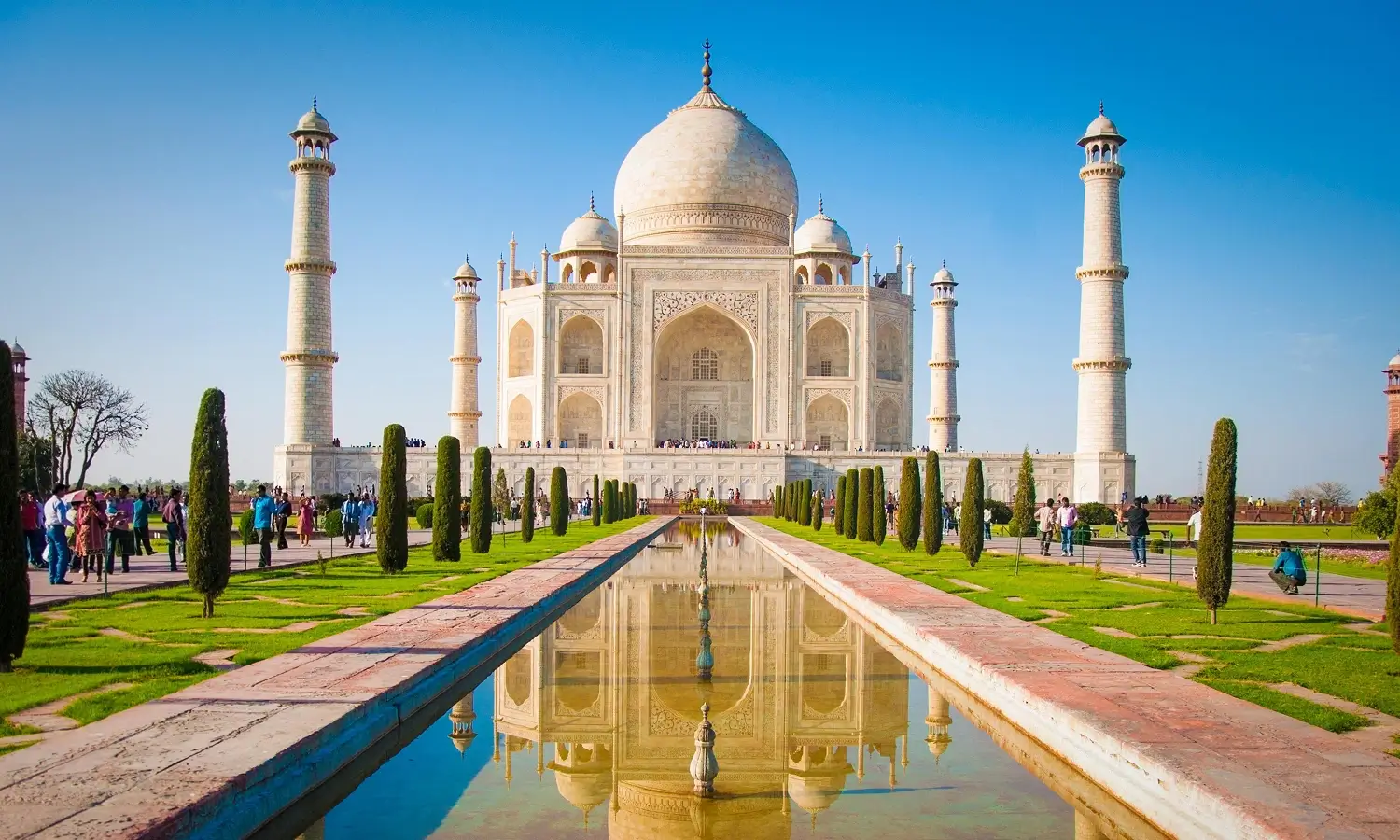
The Taj Mahal is the defining highlight attraction of Agra and one of the most recognised monuments in the world. Commissioned in 1632 by Mughal Emperor Shah Jahan in memory of Mumtaz Mahal, this white marble mausoleum is known for its symmetry, intricate inlay work, and architectural precision.
Why It Stands Out
- One of the Seven Wonders of the World
- UNESCO World Heritage Site
- Famous for pietra dura inlay and marble craftsmanship
- Represents the peak of Mughal architecture
02 : Agra Fort
Just 2.5 km from the Taj Mahal, Agra Fort is not just another monument but the political and residential heart of the Mughal Empire before Delhi took over. It provides essential context to the Taj Mahal by showing how the empire functioned beyond its most famous symbol.
Why visit :
- Adds historical depth to your Taj Mahal experience
- Houses multiple palaces, halls, and courtyards within one complex
- Offers distant views of the Taj Mahal from inside the fort
Reality check : Can feel like “another fort” if visited without understanding its connection to the Taj Mahal
03: Fatehpur Sikri
Located about 40 km from Agra, Fatehpur Sikri is a remarkably well-preserved Mughal capital built by Emperor Akbar. Unlike Agra’s standalone monuments, this is an entire planned city, offering a deeper look into how the Mughal Empire actually functioned.
Why visit :
- A complete Mughal city layout, not just a single monument
- Iconic structures like Buland Darwaza, Panch Mahal, and Diwan-i-Khas
- Less crowded and more spacious than Agra’s main sites
Reality check :
- Requires a half-day commitment, which may not fit tight itineraries
- Limited shade and can feel hot, especially in summer
04 : Mehtab Bagh and Other Key Attractions
Mehtab Bagh, or the Moonlight Garden, sits directly across the Yamuna River from the Taj Mahal and offers some of the most spectacular and crowd-free views of the monument available anywhere in the city.
Built by Shah Jahan himself, this walled garden complex is an ideal spot for photography at sunrise or sunset. Itmad-ud-Daulah's Tomb, often called the Baby Taj, is another refined marble mausoleum famous for its delicate lattice work and intricate inlay patterns and is considered an architectural forerunner to the Taj Mahal.
Akbar's Tomb in nearby Sikandra, about 10 kilometres from the city centre, rounds out a complete Agra sightseeing itinerary beautifully with its impressive gates, serene gardens, and roaming peacocks.
Agra and the Golden Triangle Circuit
Agra holds a central place on India's most famous travel route, the Golden Triangle tourist circuit, which connects Delhi, Agra, and Jaipur in a single, well-travelled loop. This route gives visitors a rich cross-section of North Indian history, culture, and architecture, and Agra is widely considered its most dramatic highlight.
Things to Know Before You Go
- Agra can be crowded, especially during peak season
- Early morning visits are best for major monuments
- Hiring a guide improves understanding of Mughal history significantly
- Traffic and local movement can take longer than expected
Shopping and Food in Agra
Focus on a few key markets rather than exploring all, as most offer overlapping products.
Agra's bazaars are as much a part of the city's character as its monuments. Kinari Bazaar is the go-to destination for traditional textiles, embroidered fabrics, bangles, and jewellery. Sadar Bazaar is popular for leather goods, marble handicrafts, and brassware. Taj Ganj Market, located right beside the Taj Mahal, is ideal for marble replicas, souvenirs, and handcrafted gifts rooted in Agra's famous marble and soft stone craft traditions.
Agra's food culture is deeply rooted in its Mughal culinary heritage. The city's most iconic sweet is Petha, a translucent soft candy made from ash gourd, unique to Agra and available in dozens of flavours across the city.
Bedai and Aloo Sabzi, a traditional local breakfast of deep-fried bread served with spicy potato curry, is another must-try. For a fuller dining experience, Mughal cuisine featuring slow-cooked biryanis, rich kebabs, and aromatic curries is best enjoyed at the restaurants of heritage hotels near the Taj Mahal.
How to Reach Agra?
Most travellers reach Agra from Delhi, making it one of the easiest destinations to access in North India.
- By Air : Agra's Kheria Airport is the nearest airport, located around 8 kilometres from the city centre, with limited direct connections. Indira Gandhi International Airport in Delhi is the most practical air entry point for most international travellers, followed by a road or rail journey to Agra.
- By Rail : The Gatimaan Express connects Agra with New Delhi in approximately 100 minutes and is the fastest and most comfortable train option for visitors. Agra Cantonment Railway Station is the main railhead in the city.
- By Road : The Yamuna Expressway is the fastest road route connecting Agra with Delhi and takes roughly 3 to 4 hours by car. Agra is also well connected by road from Jaipur, Lucknow, and Gwalior.
Best Time to Visit Agra
The best time to visit Agra is from October to March, when the weather is dry, cool, and pleasant, with daytime temperatures ranging from 15 to 34 degrees Celsius. This winter window is perfect for outdoor sightseeing in Agra and for exploring all three UNESCO World Heritage Sites the city has to offer.
The month of February is particularly special because the annual Taj Mahotsav festival takes place near the Taj Mahal, celebrating the rich cultural legacy of the Mughal era through ten days of music, dance, crafts, and regional cuisine. Summer months from April to June can be intensely hot, with temperatures exceeding 45 degrees Celsius, and are best avoided for outdoor exploration.
November to February offers the most comfortable experience for combining sightseeing with photography and cultural exploration.
Why Agra Deserves a Place on Every Indian Itinerary?
Agra is not just a destination but a defining moment in most India itineraries. While it can be crowded and fast-paced, the experience of seeing the Taj Mahal and exploring the city’s Mughal heritage remains unmatched. When planned correctly within a broader route, Agra delivers one of the most memorable highlights of any journey through India.





 Wildlife Tours
 Trekking Tours
 Religious Tours
 Heritage Tours
 Beach Tours
 Train Tours
 Yoga & Ayurveda Tours
 Festival Tours