Yes, especially for first-time visitors to India.
Jaipur is known as the Pink City because the entire old walled city was painted in a terracotta pink colour in 1876 to welcome the Prince of Wales. The colour, associated with hospitality in Rajput culture, was later maintained by law, and buildings in the old city are still required to follow this distinctive shade today.
01 : Amber Fort: The Crown Jewel of Jaipur Tourism
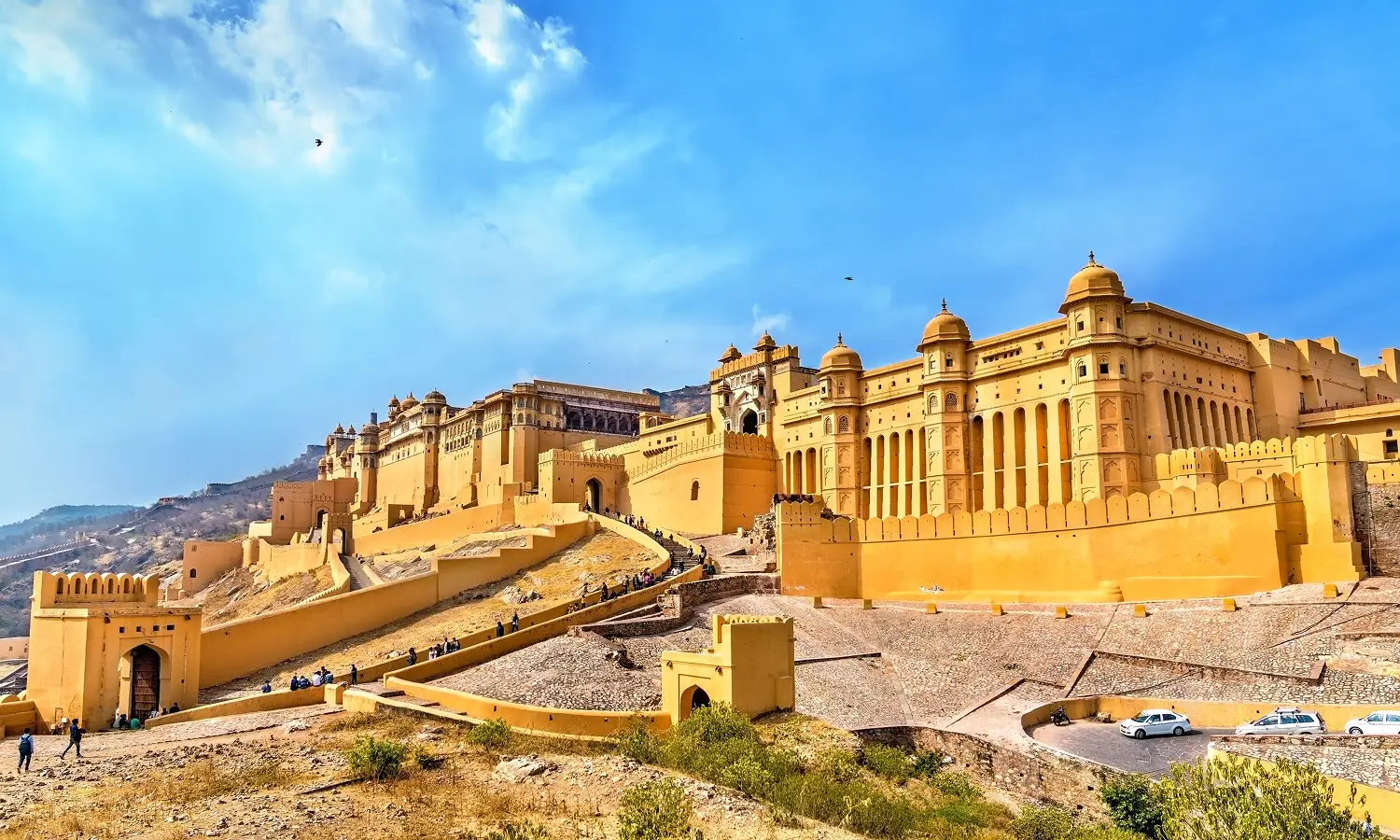
The single most important stop on any Jaipur itinerary is the breathtaking Amber Fort, also spelt Amer Fort, located approximately 11 kilometres from the city centre in the town of Amer.
Construction began in 1592 under Rajput ruler Raja Man Singh and was expanded by successive rulers over the following two centuries, resulting in one of the most spectacular hilltop forts in India. Amber Fort is one of six Rajasthan hill forts inscribed by UNESCO as a World Heritage Site and is celebrated for its remarkable blend of Hindu and Mughal architectural styles.
Why visit :
- Grand hilltop fort with Rajput + Mughal architecture
- Sheesh Mahal (mirror palace) is the standout experience
- Offers a complete palace-fort exploration
Practical info :
- Time needed: 2–3 hours
- Best time: Morning (before crowds)
- Recommended with: Local guide
Reality check :
- Can get crowded and tourist-heavy by late morning
02: Hawa Mahal: The Iconic Palace of Winds
No image of Jaipur is more recognised globally than the soaring pink facade of the Hawa Mahal, or Palace of Winds. Built in 1799 and designed to resemble the crown of Lord Krishna, this extraordinary five-storey structure features 953 intricately carved lattice windows called jharokhas through which royal women of the household could observe street processions and festivals below without being seen, in keeping with the traditions of purdah.
Why visit :
- Iconic “Pink City” visual
- Architectural design for ventilation
- Great for photography
Practical info :
- Time needed : 30–45 minutes
- Best time : Early morning
Reality check :
- More of a visual landmark than a deep exploration site
03: City Palace: Living Heritage at the Heart of Jaipur
The City Palace sits at the centre of Jaipur's walled old city and is one of the finest examples of a royal palace complex in Rajasthan. Built by Maharaja Sawai Jai Singh II and expanded by his successors, the palace beautifully blends Rajasthani, Mughal, and European architectural styles within a single sprawling compound. Remarkably, a portion of the palace remains the private residence of the royal family of Jaipur to this day.
Why visit :
- Blend of Rajput and Mughal architecture
- Museums, courtyards, and royal artifacts
- Famous Peacock Gate
Practical info :
- Time needed : 1.5–2 hours
- Entry tickets vary by access level
Reality check:
- Premium sections can be expensive
04: Jantar Mantar: A UNESCO World Heritage Astronomical Observatory
Just steps from the City Palace stands Jantar Mantar, one of the most extraordinary scientific monuments in the world. Built by Maharaja Sawai Jai Singh II between 1728 and 1734, this open-air astronomical observatory contains 19 monumental masonry instruments designed to measure time, predict eclipses, track celestial bodies, and calculate astronomical positions with remarkable accuracy.
Why visit :
- Unique scientific heritage site
- World’s largest stone sundial
Practical info :
- Time needed : 45–60 minutes
- Best combined with : City Palace
Reality check :
- Less engaging without basic understanding or guide
05: Nahargarh Fort and Jaigarh Fort
Perched on the rugged ridges of the Aravalli Hills overlooking the entire city, Nahargarh Fort offers the most dramatic panoramic views of Jaipur available anywhere. Built as a retreat and defensive fortification, the fort is quieter and less crowded than Amber Fort, making it a particularly rewarding visit for travellers who prefer their heritage sites with space to breathe.
Nearby Jaigarh Fort, constructed in 1726 by Maharaja Sawai Jai Singh II at 500 feet above sea level to guard the Amber Fort complex below, is home to the Jaivana Cannon, reputedly the world's largest wheeled cannon. Together, all three hilltop forts offer an interconnected experience of Jaipur's formidable Rajput military architecture.
06: Jal Mahal and Other Key Attractions
The ethereal Jal Mahal, or Water Palace, appears to float gracefully on the surface of Man Sagar Lake against a backdrop of the Aravalli Hills and is one of the most visually striking sights in Jaipur sightseeing. Although the palace itself is not open to visitors, the lakeside promenade offers spectacular views, particularly at sunset.
Albert Hall Museum, the oldest museum in Rajasthan, houses an outstanding collection of ancient coins, manuscripts, paintings, royal costumes, and even Egyptian mummies, making it a fascinating stop for history lovers. Chokhi Dhani, a cultural village resort on the outskirts of the city, offers visitors an authentic experience of traditional Rajasthani folk culture, including folk dances, puppet shows, camel rides, and regional cuisine in a single immersive setting.
Jaipur and the Golden Triangle Circuit
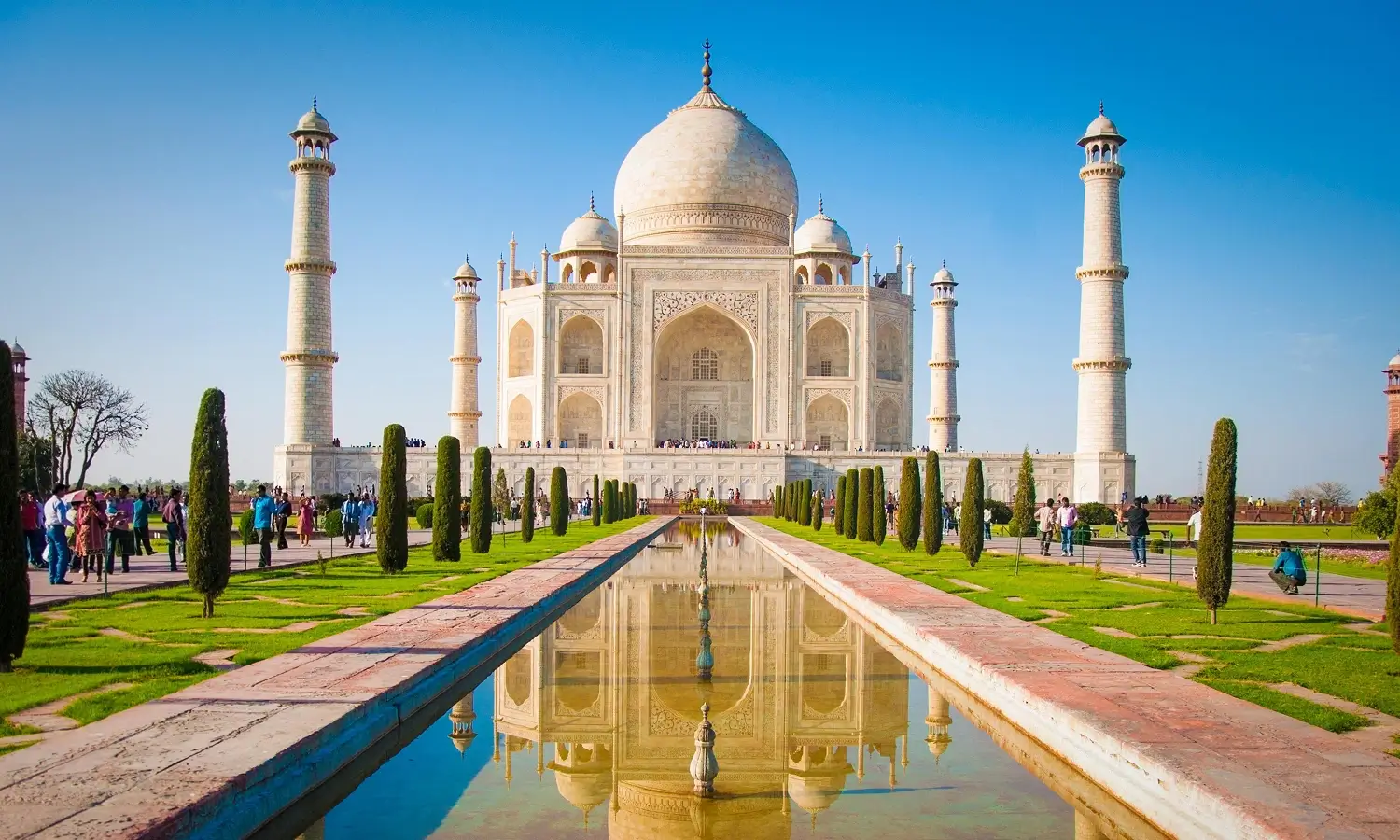
Jaipur holds its place as the most culturally vibrant stop on India's most travelled route, the Golden Triangle tourist circuit connecting Delhi, Agra, and Jaipur. While Delhi offers Mughal grandeur and Agra delivers the Taj Mahal, Jaipur contributes the full richness of Rajput heritage, from hilltop forts and royal palaces to living craft traditions and an old city that pulses with colour and commerce.
For first-time visitors to India, the Golden Triangle tour remains the most rewarding introduction to the country, and Jaipur is consistently its most memorable chapter.
Shopping and Bazaars in Jaipur
Jaipur is rightly considered one of the finest shopping destinations in India, renowned across the country for its gemstones, jewellery, textiles, blue pottery, and handcrafted leather goods. Johari Bazaar is the heart of Jaipur's legendary gem and jewellery trade, where master craftsmen have worked for generations cutting and setting precious and semi-precious stones.
Bapu Bazaar is the place for vibrant printed textiles, traditional Rajasthani mojari footwear, and embroidered fabrics. Tripolia Bazaar specialises in lac bangles, metalwork, and brassware. The entire walled Pink City bazaar area was designed from the city's very founding as a centre for arts, crafts, and trade, and that original vision remains gloriously intact today.
Food and Culinary Culture in Jaipur
Jaipur's food culture is a proud reflection of Rajasthan's bold and distinctive culinary identity. The most iconic dish is Dal Bati Churma, a traditional Rajasthani platter of lentil curry, ghee-soaked baked wheat dumplings, and a crumbled sweet dessert that together define the essence of the region's cooking.
Kachori, a deep-fried spiced pastry, is the city's most beloved street snack and is consumed at breakfast stalls across the old city every morning. Mirchi Bada, a fiery fritter of green chilli stuffed with spiced potato, is another street food institution. During festivals, Ghewar, a traditional sweet made from flour and ghee soaked in sugar syrup, appears across sweet shops throughout the city.
Things to Know Before You Go
- Distances are manageable, but traffic can slow you down : Major attractions are spread across the city and nearby hills, so planning routes in advance saves time.
- Start early for forts like Amber : Crowds build quickly after 10 AM, especially during peak season.
- The old city is best explored on foot or by auto-rickshaw : Narrow lanes and markets make car movement slow and impractical.
- Ticket pricing varies significantly : Some attractions (like City Palace premium sections) have higher entry fees, so plan accordingly.
- Shopping requires basic price awareness : Jaipur’s bazaars are famous, but prices can vary widely between tourist-facing and local shops.
- Summers are extremely hot : From April to June, daytime sightseeing can be uncomfortable due to temperatures crossing 40°C.
- Guides can improve the experience : Especially at forts and palaces where historical context adds depth.
How to Reach Jaipur?
- By Air : Jaipur International Airport (Sanganer Airport) is well connected to major Indian cities, including Delhi, Mumbai, Bengaluru, and Hyderabad, as well as several international destinations.
- By Rail : Jaipur Railway Station is a major railhead with frequent and well-connected train services from Delhi, Mumbai, Agra, and other key cities across India. The journey from Delhi takes approximately four to five hours by express train.
- By Road : Jaipur is approximately 270 kilometres from Delhi and is easily accessible via the Delhi-Jaipur Expressway (NH48), one of the best-maintained national highways in North India. The drive takes around four to five hours by car and is a comfortable road journey through the Rajasthan countryside.
Best Time to Visit Jaipur
The best time to visit Jaipur is between October and March, when the weather is cool, dry, and perfectly suited for exploring the city's outdoor forts, palace courtyards, and bazaars. Temperatures during this period range from around 8 degrees Celsius at night to a comfortable 25 degrees Celsius during the day.
The month of January brings the vibrant Jaipur Literature Festival, one of the world's largest and most celebrated literary gatherings, which draws authors, thinkers, and readers from across the globe.
The Teej Festival in July or August and the Gangaur Festival in March are two of Rajasthan's most spectacular traditional celebrations and are worth timing a visit around if possible. Summer months from April to June are intensely hot, with temperatures regularly exceeding 40 degrees Celsius.
Why Jaipur Deserves a Central Place on Every India Itinerary?
Jaipur is the kind of city that rewards every traveller who arrives with curiosity and leaves with wonder. Between the commanding grandeur of Amber Fort, the iconic facade of the Hawa Mahal, the scientific brilliance of Jantar Mantar, the living heritage of the City Palace, and the colour and energy of its ancient bazaars, the Pink City delivers one of the most complete and satisfying travel experiences in the entire country.
It is a city where history is not locked away in museums but lives openly in every street, monument, and market stall. Plan at least three full days to explore Jaipur tourism properly, and you will leave understanding exactly why this extraordinary city has captured the imagination of travellers from around the world for centuries.






 Wildlife Tours
 Trekking Tours
 Religious Tours
 Heritage Tours
 Beach Tours
 Train Tours
 Yoga & Ayurveda Tours
 Festival Tours